Concord Grape Juice

Storm’s comin!

New England has been battening down for Tropical Storm Hermine. So far she hasn’t brought much more than a dreary break in the stunning fall weather, but Monday had some high winds that got me worried about the fruit in the garden. The perimeter fence has a few big old concord grape vines that belong to no one in particular. This year I decided (with the garden manager’s permission, mind you) that at least some of them belong to me. So I braved the pre-Hermine gusts and rescued the ripest ones.

I didn’t weigh at the time, but I’d guess I picked about ten pounds.

some_text

My initial plan was to make a big batch of wine. The king of concord grape wine is Manischewitz, which I’ve always had a soft spot for because it tastes just like grape juice. I followed that logic and asked myself: wouldn’t it be nicer just to have grape juice?

Yes it would.

My parents have made grape juice for years. I think it might be my grandmother’s recipe. The jars line a shelf in the basement, and a couple always get brought up for Christmas and Thanksgiving. Gosh is it good. The ingredients, emailed by my mom, are:

  • 1 heavy cup concord grapes
  • 2/3 cup white sugar
  • boiling water

And that’s it! Since it’s not fermented, it has to be processed in the canner. I heated up a bunch of quart jars to sanitize them.

some_text

I dealt with the jars one at a time. I removed one from the canner, dumped in the sugar and grapes, and filled it almost to the top with boiling water. The water turned out to be the limiting factor, since my kettle only held three jars’ worth.

some_text

The jar full, I fitted the screw top lid and put it back in the canner. Once all the jars were done, I added more water so the jars were completely submerged. I raised the heat to a hard boil, put the lid on the canner, and processed for 20 minutes. During those 20 minutes I made an unsettling discovery – my canner is so big it has to straddle two burners, and with the water high enough to cover the quart jars, it spills over the sides… straight onto the open gas flames below. Twice I had to turn off a burner when the flame went out completely. I can’t imagine this is good for the stove, and it sure wasn’t good for my peace of mind. Maybe I’ll have to invest in an outdoor camp stove.

some_text

I processed two batches, making for a dozen jars and 3 gallons of juice. At this point I ran out of quart jars (and patience watching for gas leaks). I had about 3 1/2 pounds of grapes left, so I mixed them up with some sugar and yeast. We’ll have about a gallon of knockoff Manischewitz after all!

There are three distinct layers in the jars, but I have it on good authority from my mom that this is normal: “Do not stir or shake the juice. You’ll think you’ve screwed up because the grapes and sugar will sit in the bottom. As times passes, the grapes will move, the sugar dissolve, and the juice turn pink/red.”

Well, my grapes are on the top. Hopefully that doesn’t matter.

some_text

Of the twelve jars, one didn’t seal properly for some reason. Since I can’t store it, I’ll just have to drink it. I shook it up to mix in the sugar and poured a glass. It’s not as dark or as strong as the goal, but the taste is perfect. Three gallons may not be enough.

some_text

Glass courtesy of Endless Brewing, my beloved hometown brewery. Go see them and tell them I sent you. You probably won’t get a free beer, but you’ll almost definitely get a smile of recognition. And the beer is worth it.

Wine Made Out Of Grapes

John Lennon and I have the same birthday. 20151003_114718

He would’ve turned 75 last week. I turned 27. I don’t know what Yoko would have gotten him, but Ben got me a big pile of grapes.

We went to the beer and wine supply store across town. Actually I walked around the neighborhood and pretended not to know what was going on while Ben got bombarded with advice from the old regulars. In the end he got me more and bigger carboys so I can up production, and we were sent down the road to a warehouse where the owner of the store was dolling out grapes.

This guy gets outrageous shipments of grapes and pre-pressed juice from California and Europe, and sells them to every old Italian, Portuguese, and Spanish guy in the city who has a few extra thousand to spend. I actually watched a man drop upwards of two-thousand dollars on juice. When we told the owner we wanted a single case of grapes, he shook both our hands, called us the customers of the day, and brought the grapes out himself. I suspect he may have been making fun of us. He was very good-natured about it, though.20151004_165255

One case proved to be more than enough. They’re Merlot, specially picked because they were the only whole grapes left. The real business seems to be in juice, because the average customer is in it for next year’s wine supply and not the authenticity of the experience. A very friendly man named Johnny explained his juice-filled SUV to me by working out the ultimate cost to three dollars a bottle. My bottles are going to be considerably more valuable when I factor in all the man-hours it took to separate the things from their stems. I’m smiling here, but by the time I was finished I was so sick of grapes.

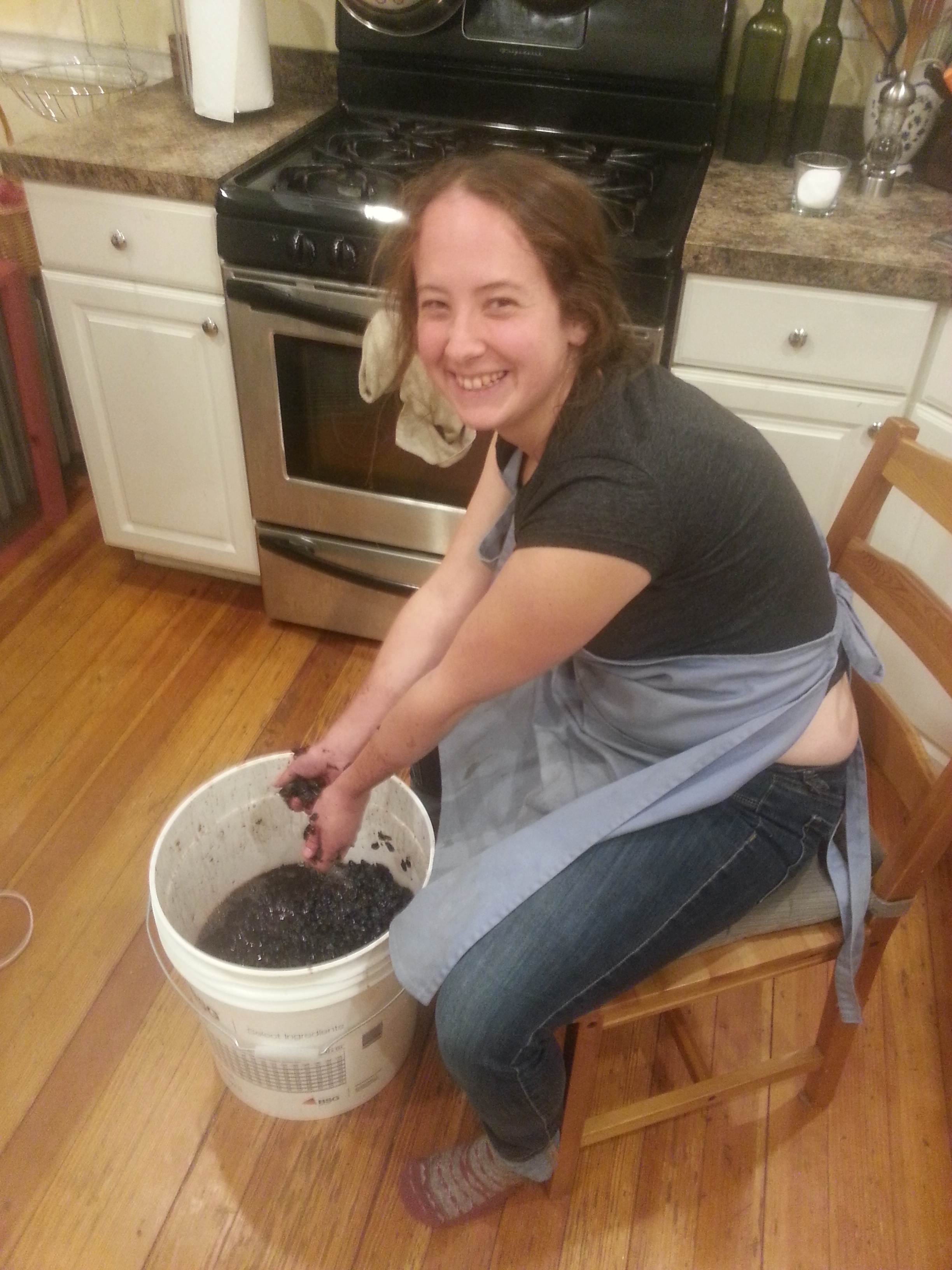
Once the grapes were in the bucket and the walls and floors were de-stickified, It was time to smash. Everyone I talked to wanted me to do the old-fashioned foot method. I did consider it, but in the end I went with tried and true hands.   20151004_192535

I mixed in some sodium metabisulfite and left it overnight to sanitize. The next day I added yeast, yeast nutrient, and a little sugar. I got pretty hung up on the sugar, since I have yet to find a good way to use the hydrometer. The whole point of the thing is to let it float free in the juice to measure the buoyancy and, therefore, the sugar content. I tried putting it straight in the bucket, but it was so full of grape skins I may as well have been sticking it in jello. I tried extracting some juice into the hydrometer’s cylindrical container, but it’s so narrow that any amount of sediment (of which there was a lot) can jam or buoy the hydrometer, making it impossible to read. I tried a champagne flute, but it was too shallow and too wide. In the end I got some semblance of a reading and looked up the amount of sugar it should take to raise the specific gravity to a suitable number. I threw in exactly that amount and washed my hands of the whole thing. There must be a better way.

I let the grapes ferment for a few days, punching down the skins about three times a day. That’s an aspect I’m not used to – the bubbling of the fermentation pushes the solid elements up, creating a cap that has to be pushed back down.

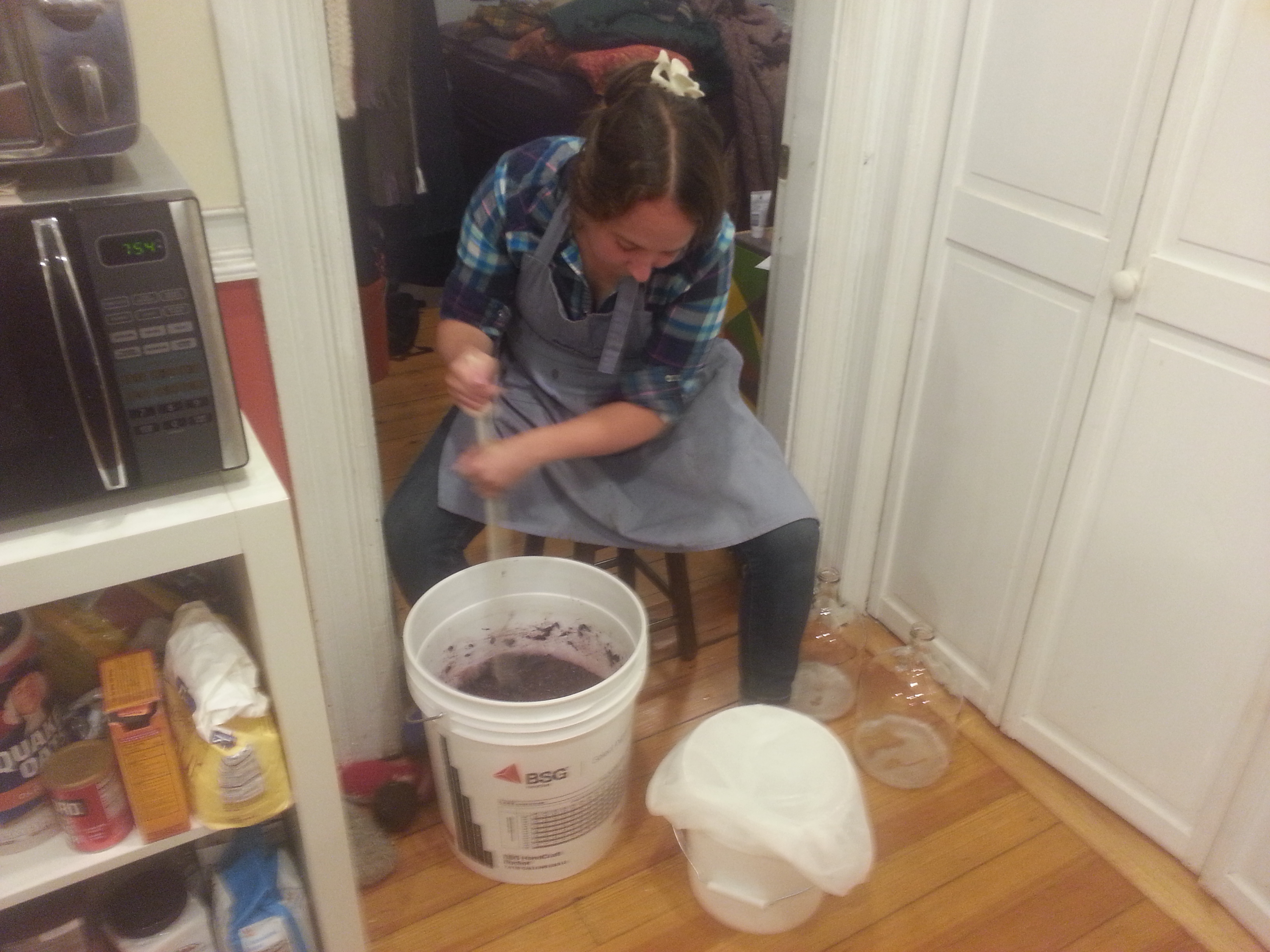
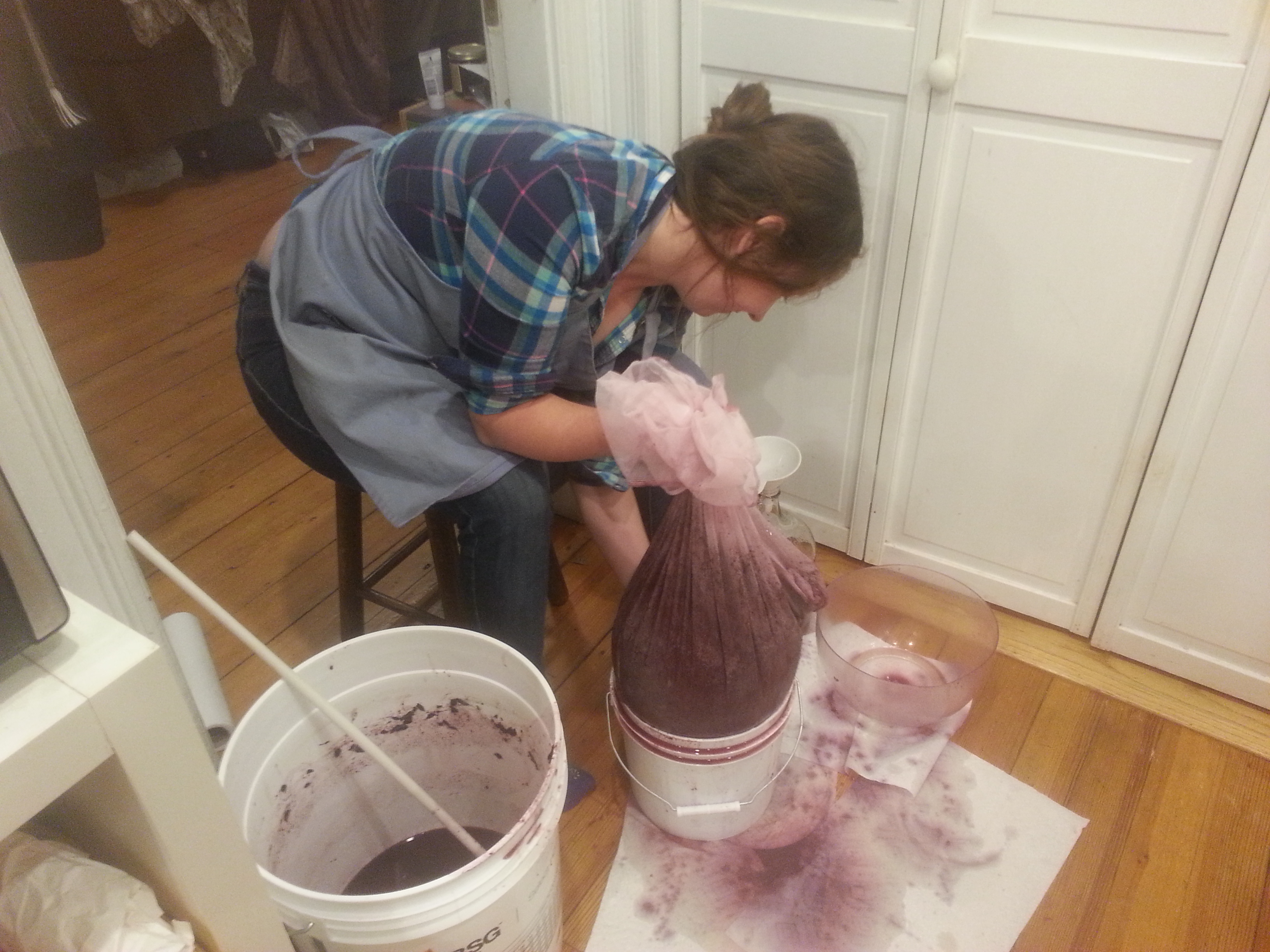
Finally it was time to rack to the carboys. It’s important, at this point, to press your grapes, getting all that good juice out. I priced wine presses, and they range from $80 to higher numbers I also can’t afford. I did a stripped down and maybe not kosher version in which I poured my grape goop into a bucket lined with a nylon sack, as you can see here. A birthday cake was being made on the table, so I was relegated to the corner with the cat toys. Don’t tell the health department.

20151010_195538

Two types of wine come out of the pressing process: free-run and pressed. Free-run is the already flowing liquid that doesn’t need to be released by the press. In this case, it’s what dripped straight through the sack when I lifted it out of the bucket.

20151010_195607

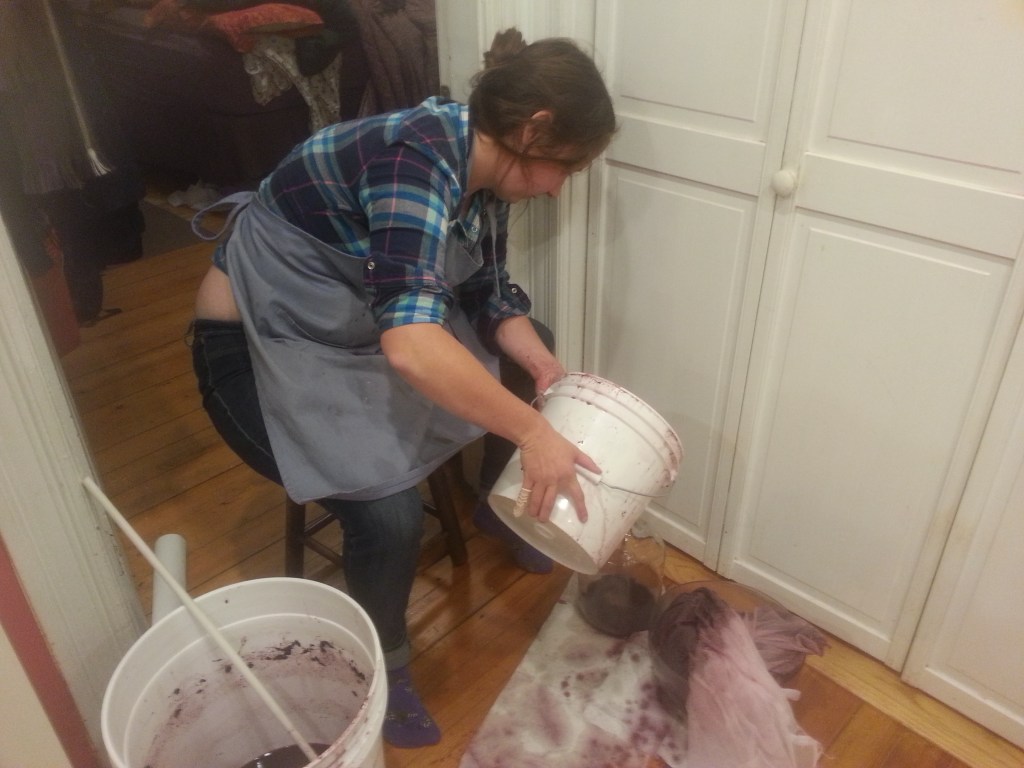
With some careful juggling and a lot of splashing, I got an easy gallon of free-run juice, which I moved to a carboy and set aside.

20151010_201942

After that came the “pressing,” an awkward job of hefting a huge sack of grapes in one hand and massaging it with the other against the side of a too-small bucket braced between my feet. I’m not sure this is how they do it in Napa Valley.

20151010_201920

My unorthodox method got me another easy gallon of juice, with some more still in the sack. If I’d really pressed, I would have gotten a decent amount more juice. But I only had two carboys on hand, and no effective way to press, anyway. So I left it at two gallons. One is all free-run, one is lightly pressed, and I have no idea from this picture which is which. Free-run is supposed to be lighter and less tanniny, so we’ll see at the next racking if I can tell the difference by taste.

20151013_095104_HDR

Of course I have them labeled on the other side of the jugs. If I identified all my wines by taste I’d be in trouble, since nothing ever comes out tasting like what I put in.