John Lennon and I have the same birthday. 
He would’ve turned 75 last week. I turned 27. I don’t know what Yoko would have gotten him, but Ben got me a big pile of grapes.
We went to the beer and wine supply store across town. Actually I walked around the neighborhood and pretended not to know what was going on while Ben got bombarded with advice from the old regulars. In the end he got me more and bigger carboys so I can up production, and we were sent down the road to a warehouse where the owner of the store was dolling out grapes.
This guy gets outrageous shipments of grapes and pre-pressed juice from California and Europe, and sells them to every old Italian, Portuguese, and Spanish guy in the city who has a few extra thousand to spend. I actually watched a man drop upwards of two-thousand dollars on juice. When we told the owner we wanted a single case of grapes, he shook both our hands, called us the customers of the day, and brought the grapes out himself. I suspect he may have been making fun of us. He was very good-natured about it, though.
One case proved to be more than enough. They’re Merlot, specially picked because they were the only whole grapes left. The real business seems to be in juice, because the average customer is in it for next year’s wine supply and not the authenticity of the experience. A very friendly man named Johnny explained his juice-filled SUV to me by working out the ultimate cost to three dollars a bottle. My bottles are going to be considerably more valuable when I factor in all the man-hours it took to separate the things from their stems. I’m smiling here, but by the time I was finished I was so sick of grapes.
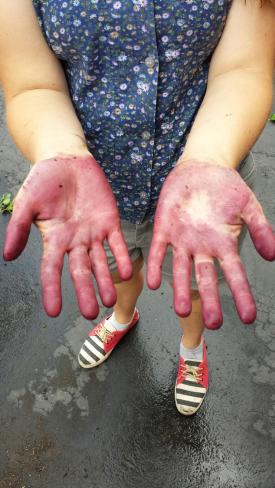
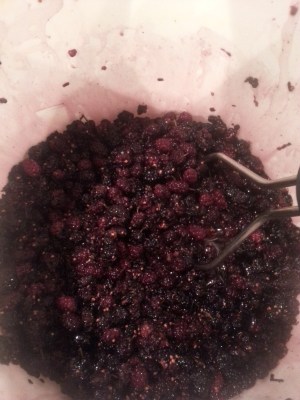
Once the grapes were in the bucket and the walls and floors were de-stickified, It was time to smash. Everyone I talked to wanted me to do the old-fashioned foot method. I did consider it, but in the end I went with tried and true hands. 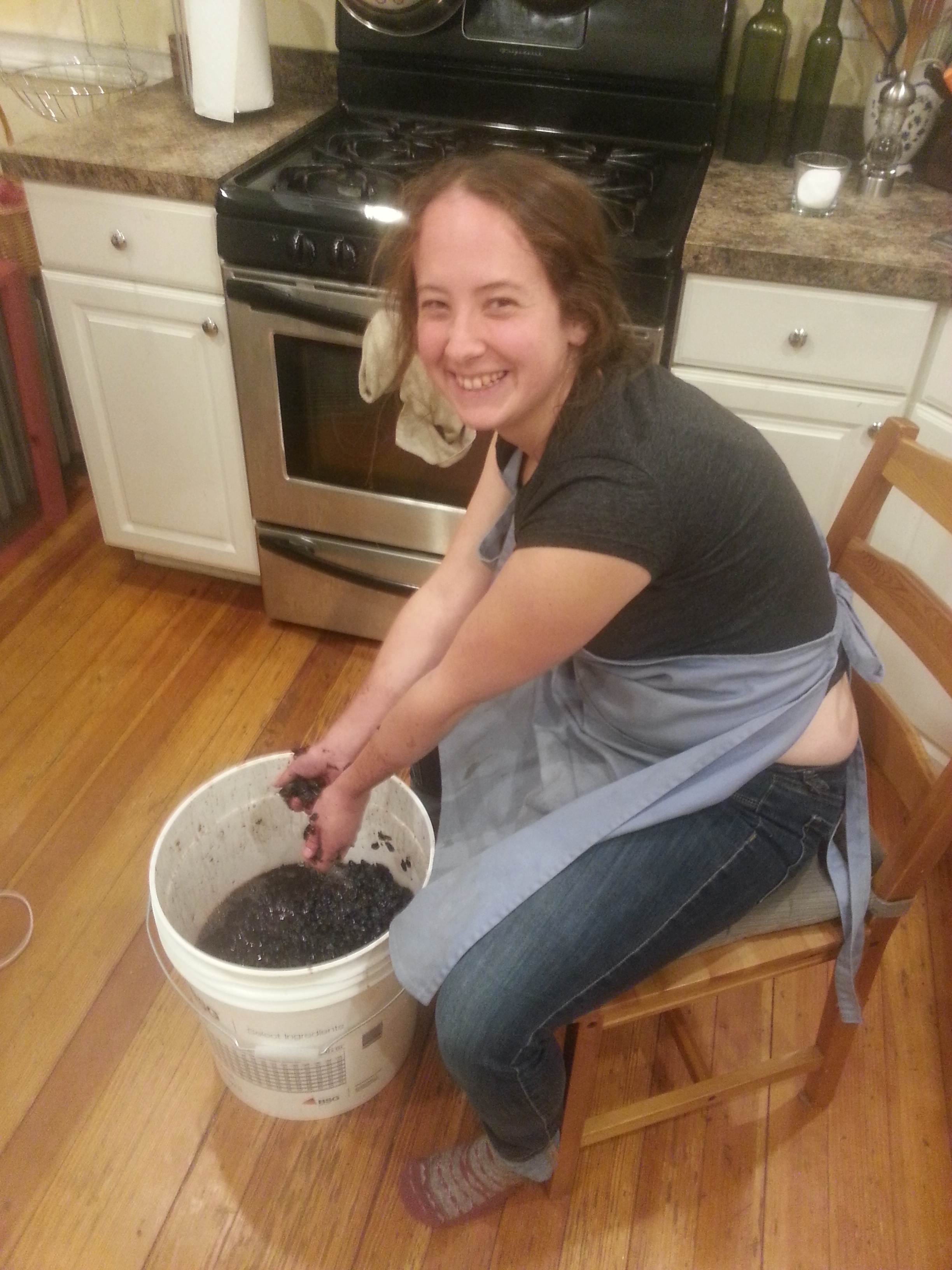
I mixed in some sodium metabisulfite and left it overnight to sanitize. The next day I added yeast, yeast nutrient, and a little sugar. I got pretty hung up on the sugar, since I have yet to find a good way to use the hydrometer. The whole point of the thing is to let it float free in the juice to measure the buoyancy and, therefore, the sugar content. I tried putting it straight in the bucket, but it was so full of grape skins I may as well have been sticking it in jello. I tried extracting some juice into the hydrometer’s cylindrical container, but it’s so narrow that any amount of sediment (of which there was a lot) can jam or buoy the hydrometer, making it impossible to read. I tried a champagne flute, but it was too shallow and too wide. In the end I got some semblance of a reading and looked up the amount of sugar it should take to raise the specific gravity to a suitable number. I threw in exactly that amount and washed my hands of the whole thing. There must be a better way.
I let the grapes ferment for a few days, punching down the skins about three times a day. That’s an aspect I’m not used to – the bubbling of the fermentation pushes the solid elements up, creating a cap that has to be pushed back down.
Finally it was time to rack to the carboys. It’s important, at this point, to press your grapes, getting all that good juice out. I priced wine presses, and they range from $80 to higher numbers I also can’t afford. I did a stripped down and maybe not kosher version in which I poured my grape goop into a bucket lined with a nylon sack, as you can see here. A birthday cake was being made on the table, so I was relegated to the corner with the cat toys. Don’t tell the health department.
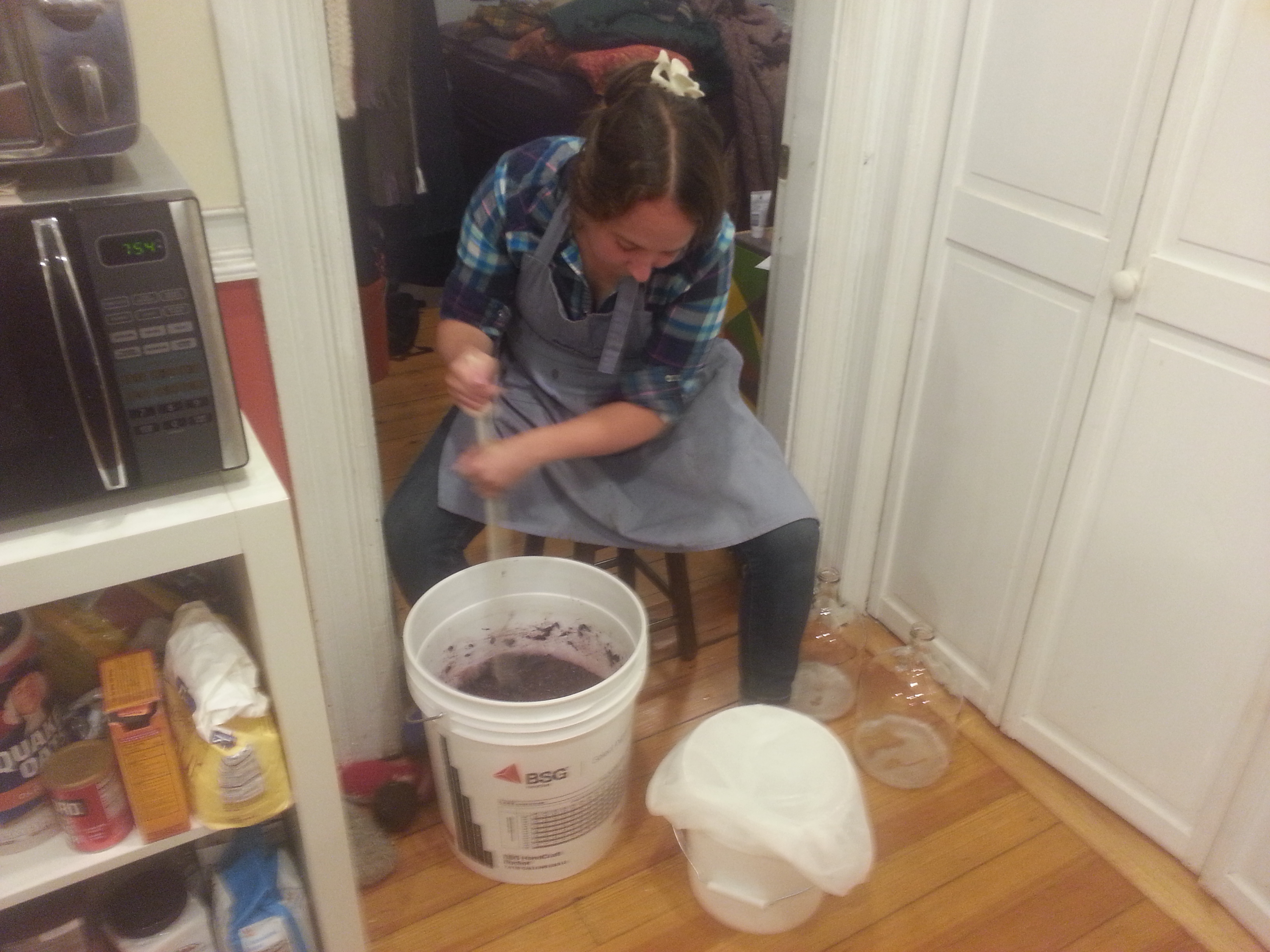
Two types of wine come out of the pressing process: free-run and pressed. Free-run is the already flowing liquid that doesn’t need to be released by the press. In this case, it’s what dripped straight through the sack when I lifted it out of the bucket.

With some careful juggling and a lot of splashing, I got an easy gallon of free-run juice, which I moved to a carboy and set aside.
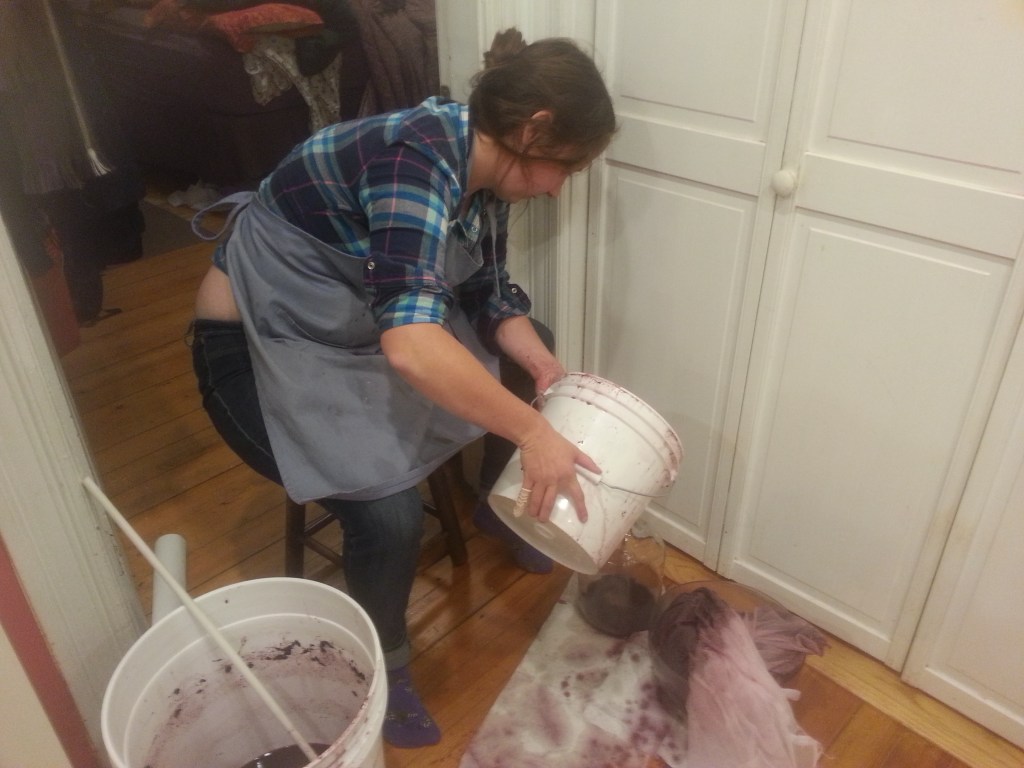
After that came the “pressing,” an awkward job of hefting a huge sack of grapes in one hand and massaging it with the other against the side of a too-small bucket braced between my feet. I’m not sure this is how they do it in Napa Valley.
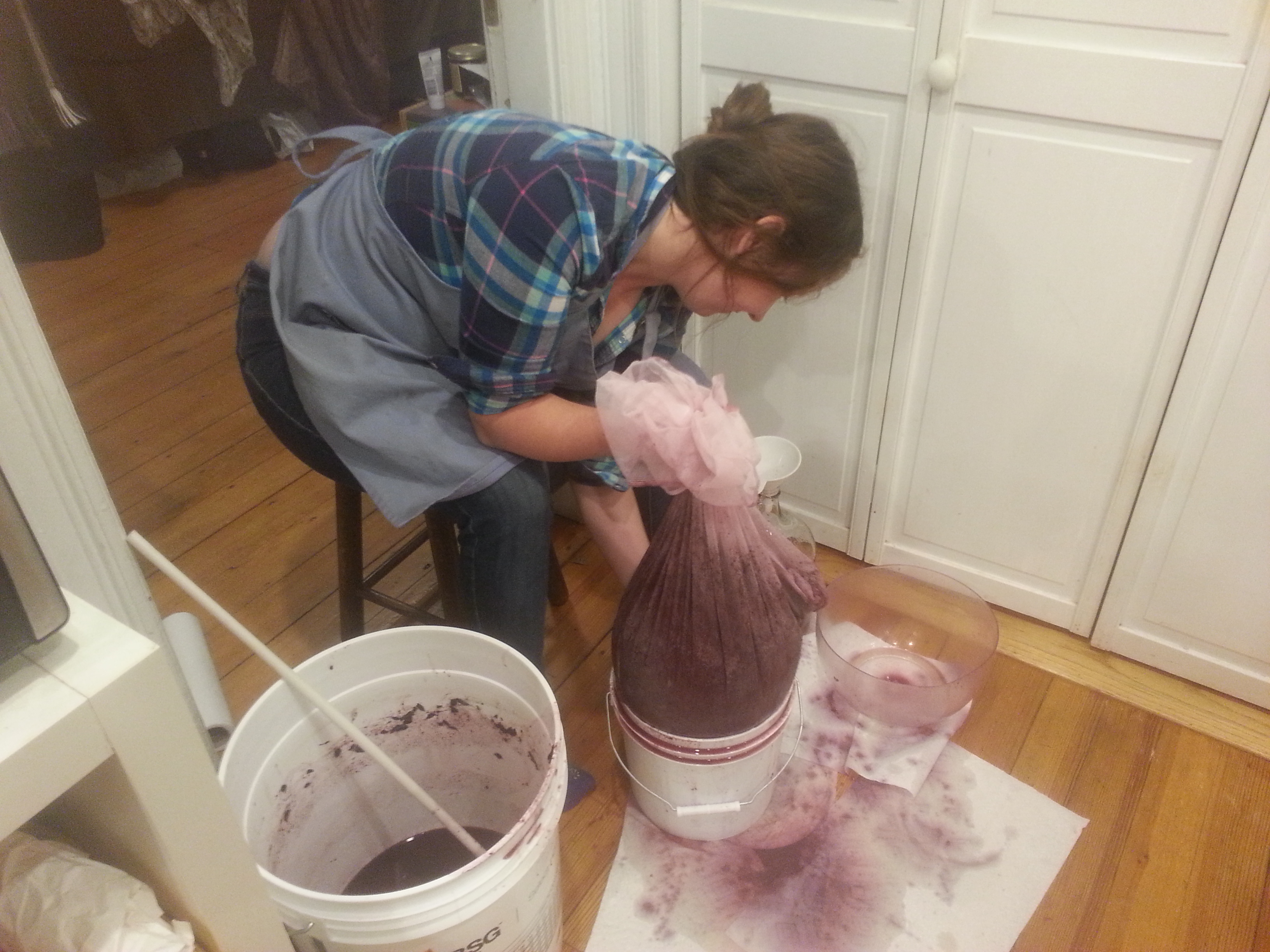
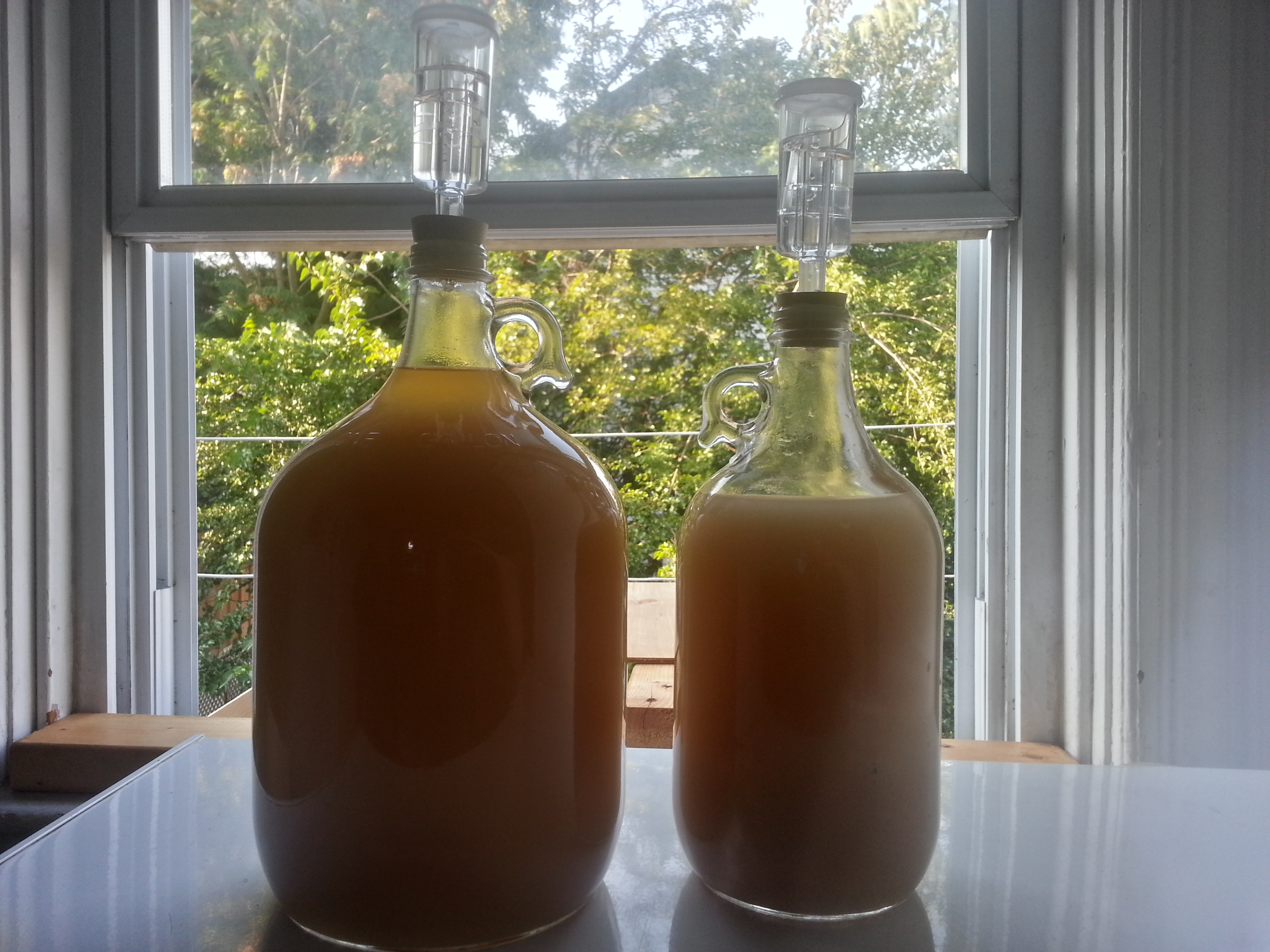
My unorthodox method got me another easy gallon of juice, with some more still in the sack. If I’d really pressed, I would have gotten a decent amount more juice. But I only had two carboys on hand, and no effective way to press, anyway. So I left it at two gallons. One is all free-run, one is lightly pressed, and I have no idea from this picture which is which. Free-run is supposed to be lighter and less tanniny, so we’ll see at the next racking if I can tell the difference by taste.

Of course I have them labeled on the other side of the jugs. If I identified all my wines by taste I’d be in trouble, since nothing ever comes out tasting like what I put in.


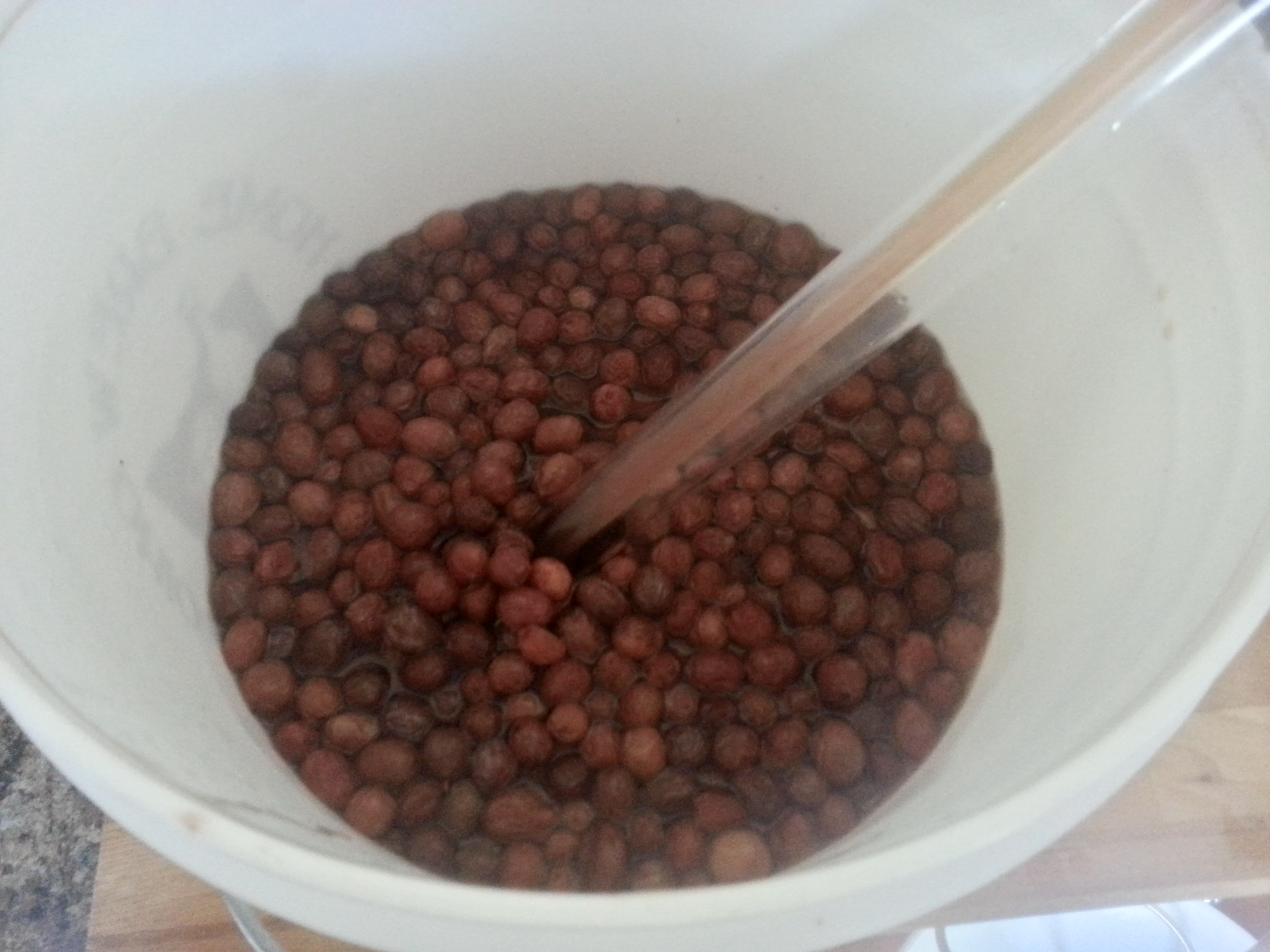


 There are six gallons of mead on my cellar floor.
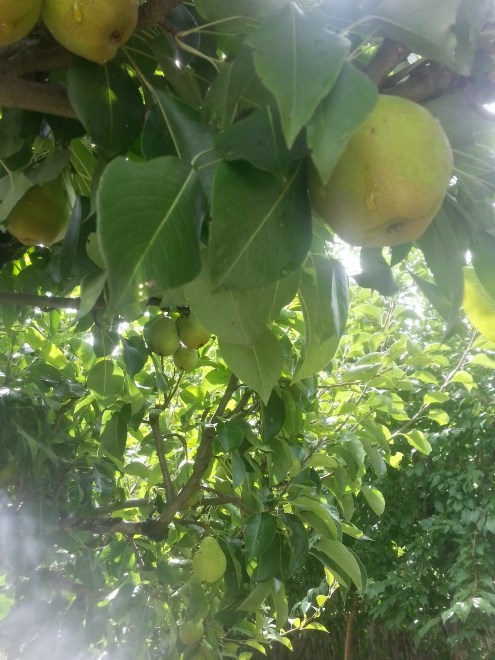
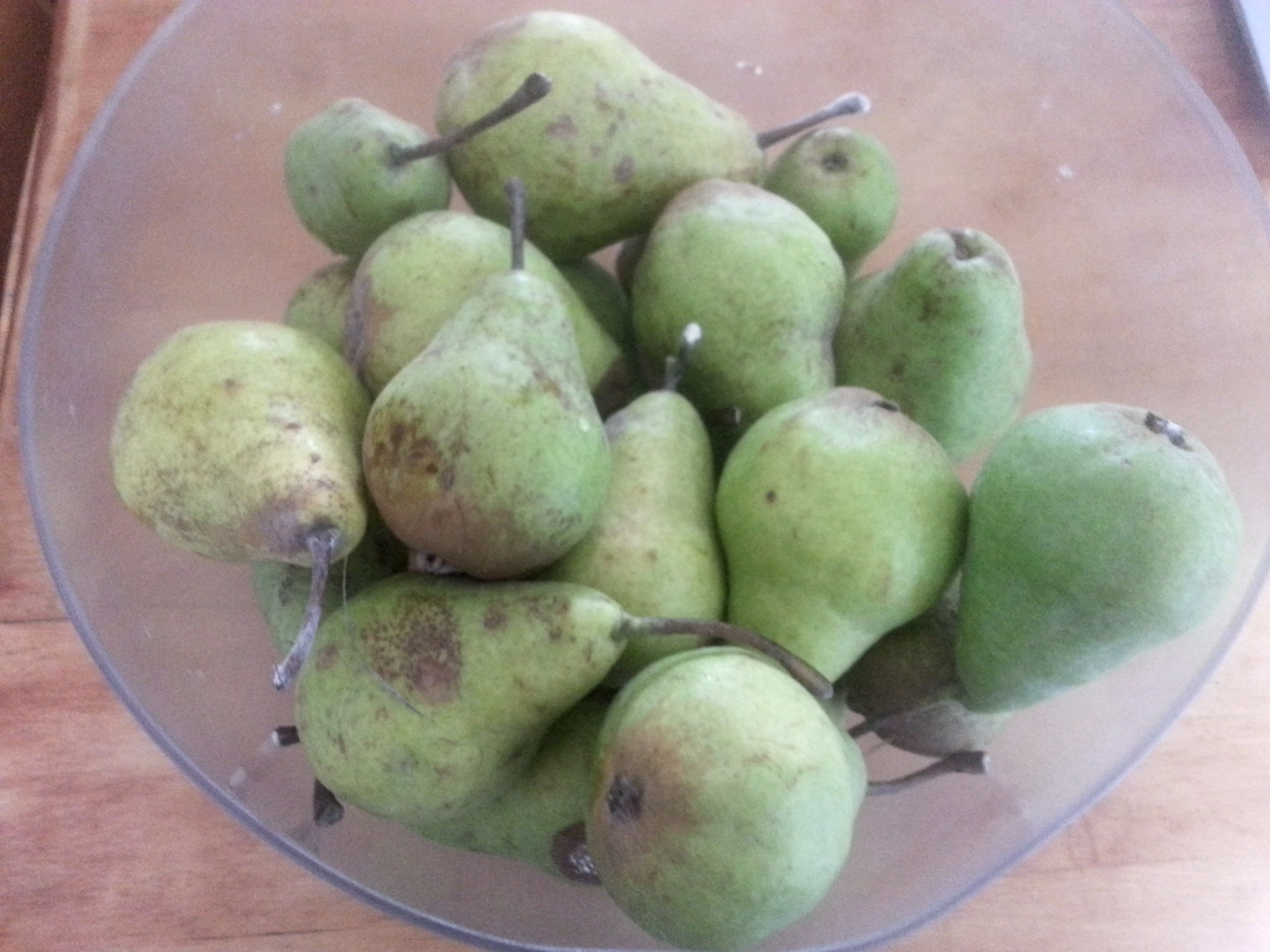
 We waded around in the wet grass, getting devoured by mosquitoes and sorting the fruit into usable and unusable. The former we split between ourselves and the latter we composted. In the end I think I had something like six pounds each of apples and pears and a couple pounds of plums. And I was supposed to go away to Cape Cod for a week the next day. Cue frantic preservation.
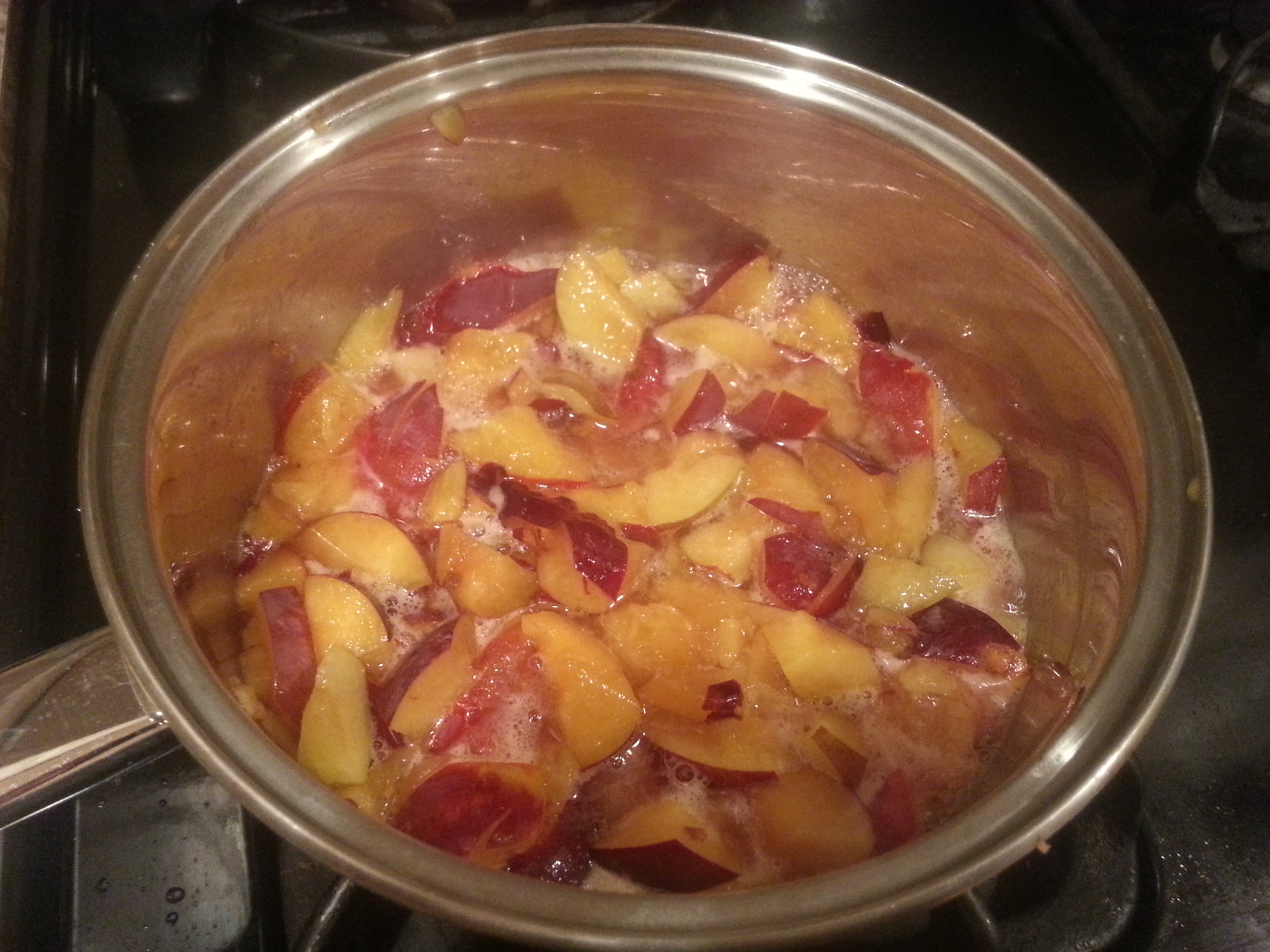



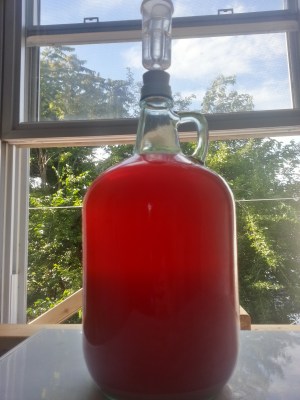 We’ll have to wait and see with the plum wine I’ve just made, too, because the exact same thing happened to it. Nice fermentation in the bucket, none at all in the carboy. Beautiful color and wine-y but not by any means good taste. Whatever the problem is, it seems to be environmental, and I’m tempted to believe it was a rapid fermentation.
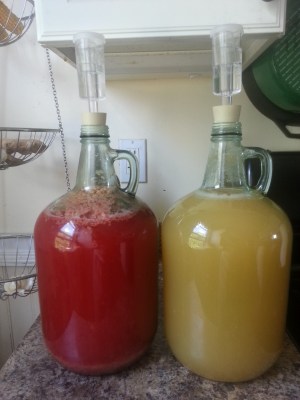 I’m as surprised as anyone. And since the only thing to do with moderate success is run with it until you trip over yourself, I’ve whipped up two more meads. They’re flavored, more ambitious, and a lot more free-wheeling. On the left we have raspberry mead, and on the right we have lavender mead. Both are bubbling away nicely.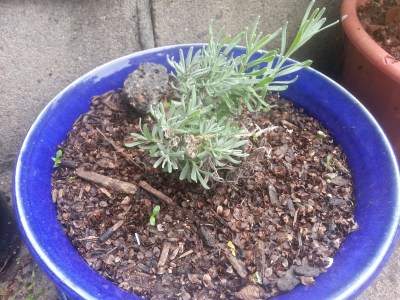
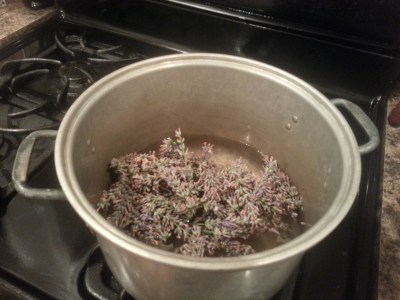 added an ounce and a half of lavender flowers. I let them steep until the water turned to a nice golden brown tea and the whole house smelled like lavender. I may have driven my roommates away for the night.

 The wines are resurfacing! For the past month or so, they’ve been bubbling and settling away in the cellar. Every now and I again I check on them to make sure they haven’t exploded and created an ant paradise. Since I went through such a wine frenzy, everything was brewed at roughly the same time. Meaning everything has to go through its next step at roughly the same time. Meaning now!


 Elderberry Wine: Basically vinegar. I don’t know where I went wrong with this one. I had such high hopes for it when I racked it the first time. It was dark and raisiny, by far the closest thing to grape wine I’ve made so far. But something has obviously changed between then and now, most likely one of those stray foreign yeasts I’m always sanitizing against. Everything I’ve read has said that if you do one thing right, it should be sanitizing. I try to sanitize faithfully, but I do have a cat and roommates and a kitchen that’s far from spotless. At my level a bad wine now and again may just be par for the course. The recipe I’m following does say that this wine improves with age, so I’ve racked it and put it back in the cellar in the hopes that the long road to improvement includes an early vinegary phase.
 I like the look of a hodgepodge of saved bottles, and I even threw in an old Jarritos bottle to show off the beautiful clear blush. I chose to use beer bottles because this wine, too, is incredibly boozy. I have an open bottle in the fridge right now that I’ve been nursing over several sittings, like a liqueur. My only regret is that I think you can taste the fact that I used grocery store strawberries that had been shipped from who knows where. Sweet as it is, I think there’s a noticeable undertone of that white, foam-like core you get in big, under-ripe strawberries. I’m going to hunt down some farmer’s market berries and attempt another batch, because I think it could be really great.
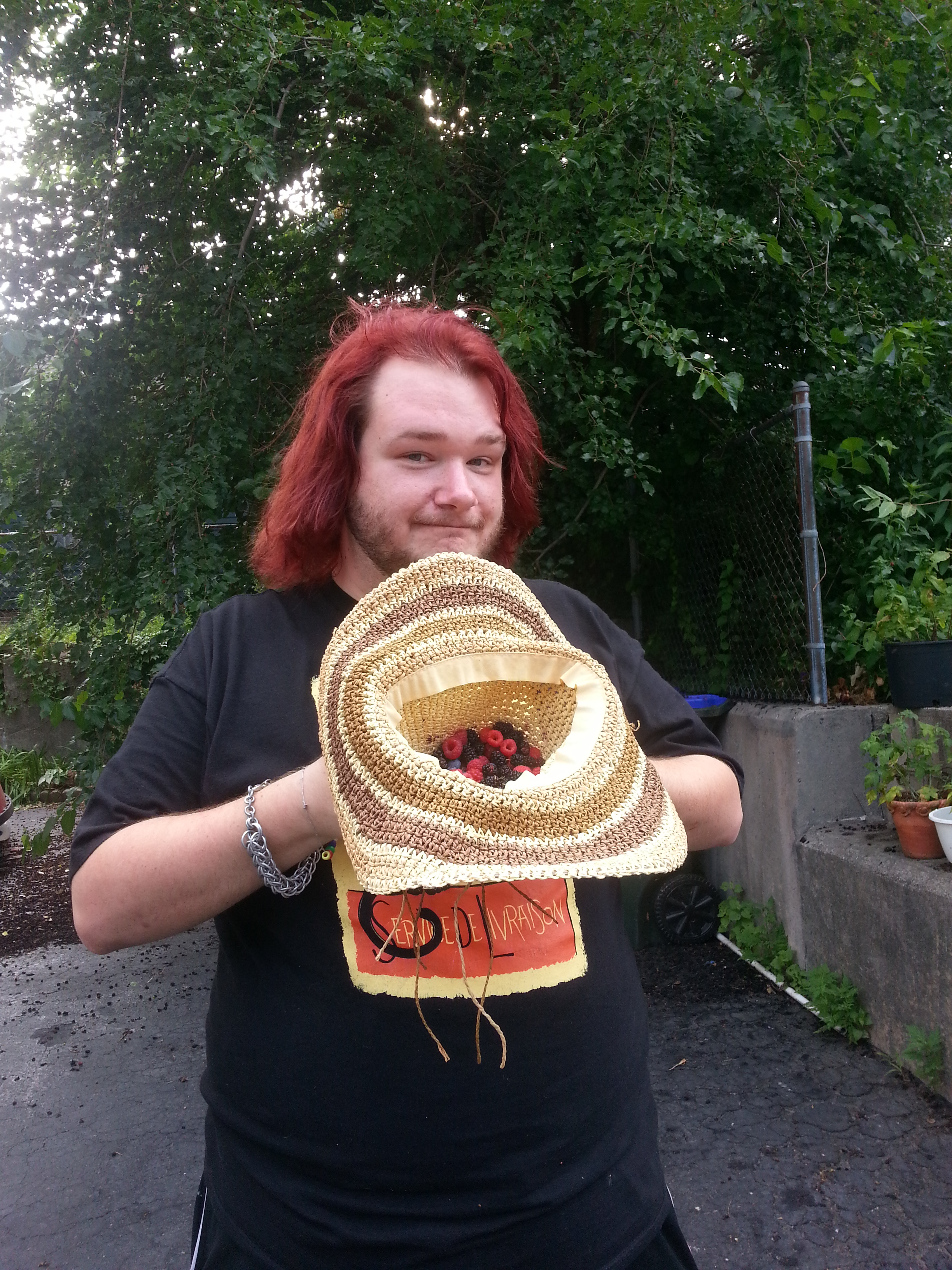
 Twice now I’ve gotten out the hose and blasted them into the street, but by the next morning they’re always back in about this thickness. I don’t want to scavenge them off the ground, since they don’t handle the impact well and start to smell vinegary pretty quickly. I’ve had dreams of hanging hammocks to catch them, but with the bird traffic around here I’m afraid I’ll catch just as much poo.
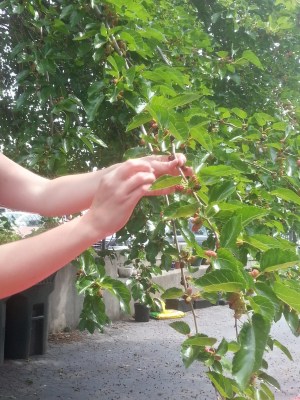


 quickly as possible. So I’m going to rack the wine, about two weeks before I was intending to, and I’m going to hope it keeps fermenting. I’m also going to rack it into a half gallon bottle, because today’s lesson is also in head space, of which I apparently have way too much. All that residual air is no good.
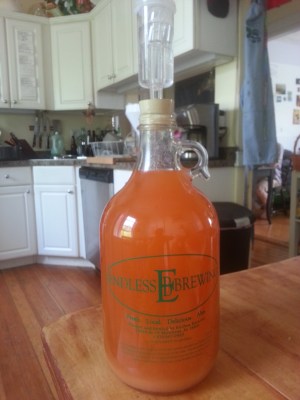 to improvise.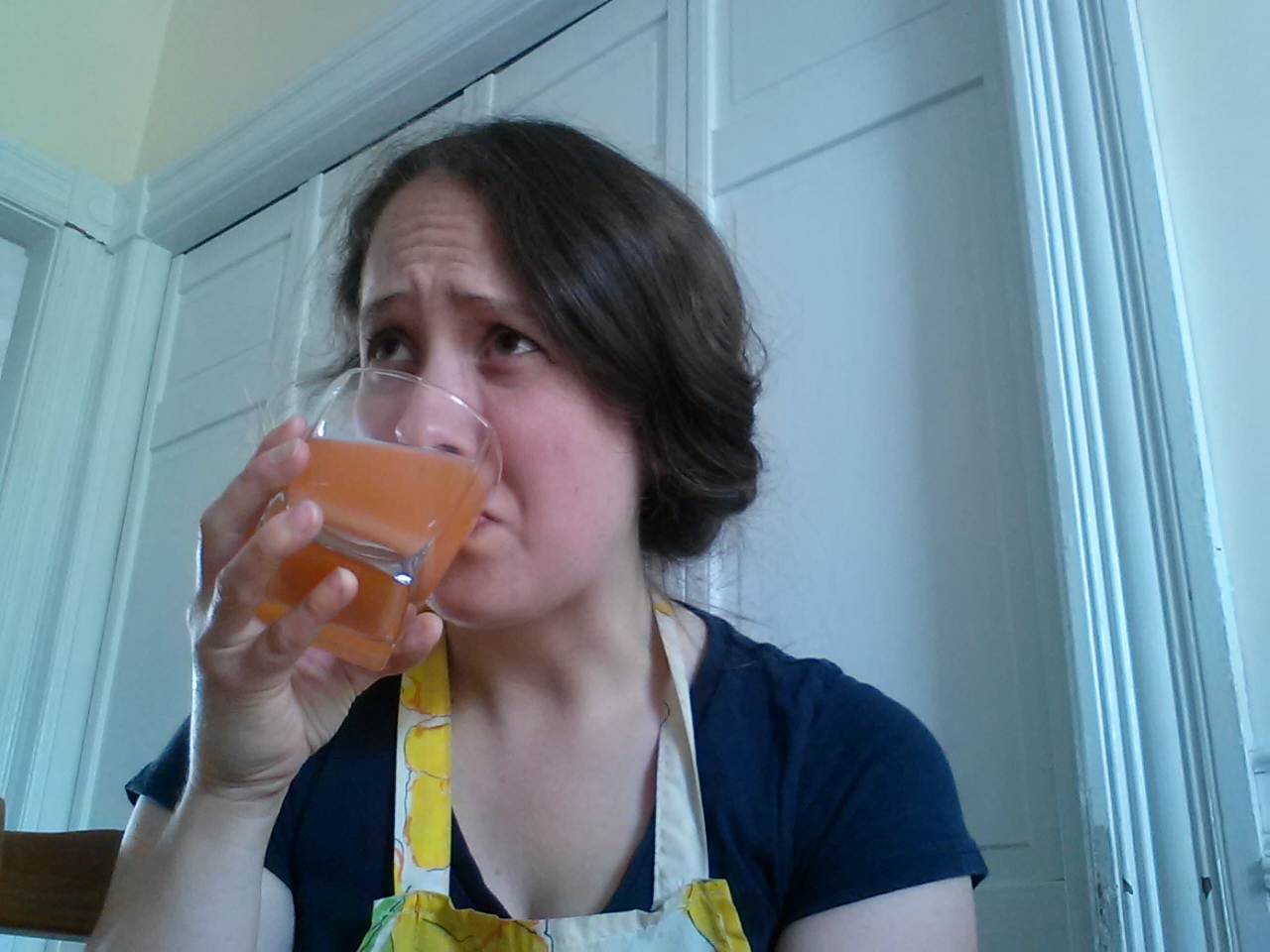

 It did.
 The day I brought it home, I hacked up my stalks and mixed them with sugar, then covered it all and left it in the closet for three days. It started as a solid mass, but during that time a whole lot of liquid was drawn out. From everything I’ve read, you want especially red stalks to make for a nice blush to the wine. As you can see, any blush to this stuff is going to be a seasick green. Oh well. The price was right.
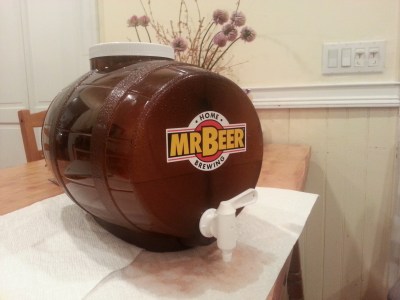 rhubarb, then strained it into my primary fermenting vessel with some yeast, yeast nutrient, and some grape juice concentrate. My snazzy new craigslist bucket is is full of blueberries, so the job has fallen to Mr. Beer. My mom got me a Mr. Beer kit for Christmas. It made a huge amount of an alright light beer that I still drink every now and again. It also gave me this pretty handy food grade plastic keg with an airlock-esque lid. Perfect! Who needs a bucket?
 …Oh wait. What’s that? All over the paper towel that’s been conveniently laid down…
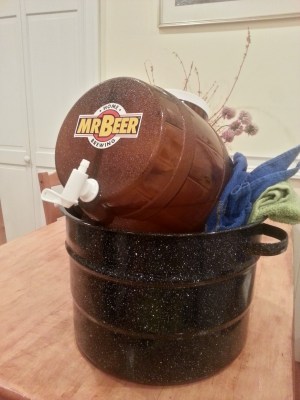 .
. Liz Baessler